WHAT ISLAM SAYS ABOUT...
Basics Of Islam
Halal Food in Islam
Halal refers to that which is permissible to Muslims.
Are kosher and halal the same?
There are many similarities between what is kosher (permissible for Jews to consume) and what is halal (permissible for Muslims to consume), but there are also significant differences.
The two dietary codes diverge on issues such as alcohol and food pairings. Kosher laws generally do not prohibit alcohol, whereas Islamic law strictly prohibits its consumption, even when used for cooking. Unlike Jews, Muslims do not require the separation of dairy and meat products.
However, both Islamic and Jewish dietary rules prohibit consuming pork and pork-derived products. They require similar ritual slaughtering procedures as well as the draining of the slaughtered animal’s blood, and both prohibit carrion (an animal found dead before slaughter). Many of the animals Muslims are allowed to slaughter are also permitted for Jews.
Are there dietary restrictions in Islam?
Yes. Muslims are prohibited from consuming pork, alcohol, and substances that impair the mind, as well as those that do not meet proper standards (detailed below).
While an exhaustive treatment of Islamic dietary rules is beyond our scope here, it suffices to say that Islam’s prohibition regarding food, drink, and substances extend beyond merely pork and alcohol.
For instance, Muslims are not permitted to use or ingest any type of intoxicating substance for merely recreational purposes. Additionally, certain types of animals (such as animals of prey) are not permitted for consumption. Even animals whose meat is permissible, if not slaughtered properly, becomes impermissible to consume.
POPULAR ARTICLES
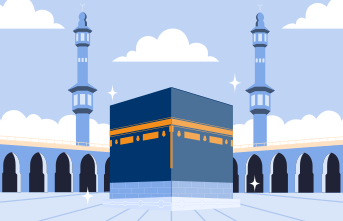
Hajj and Umrah
What is Hajj? When is Hajj? What is Umrah? What is the difference between Hajj and Umrah? Learn about the significance of Hajj, the rituals of Hajj and Umrah, and the answers to other commonly asked questions about Hajj and Umrah.
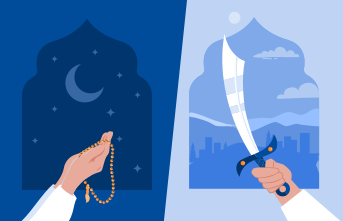
Peace & Violence
For the majority of the world’s 1.8 billion Muslims, Islam represents a comprehensive way of living a peaceful life devoted to God. However, over time, fearmongers and the actions of a few have stirred doubt about Islam’s views on violence. What does Islamic doctrine truly have to say about terrorism, jihad, and honor killings?
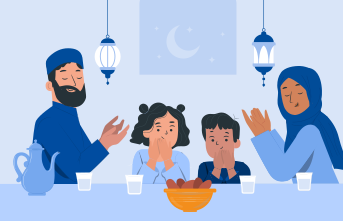
Ramadan
Ramadan is the holiest month of the year for Muslims. It’s the period in which the Prophet Muhammad (peace be upon him) was visited by the archangel Gabriel and began to receive the Qur’an—the final scripture revealed by God. Believers commemorate this revelation through prayer, charity, and building a closer relationship with God.
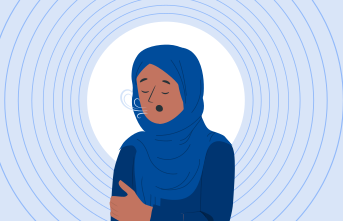
Mental Health & Wellness
Islam has a long scholarly tradition of acknowledging mental health struggles and guiding believers towards healing through both spiritual and clinical means. Explore how trauma, meditation, OCD, and other mental health topics are viewed from an Islamic lens.
Shariah
At its simplest, shariah is the Islamic interpretation of God's law, but it is also a common source of misunderstanding. Read on for an in-depth explanation of sharia, its implementation, and related terms.
Spirituality
In Islam, the sole purpose of creation is to worship and devote oneself God. As God says in the Qur’an: "I did not create jinn and mankind except to worship Me" [Qur’an, 51:56]
Women
How does Islam view women? Do women have rights in Islam? Are men and women equal in Islam? What is hijab? Explore topics around the role of women in society, modesty, inheritance laws, divorce, and other commonly-asked questions about women in Islam.
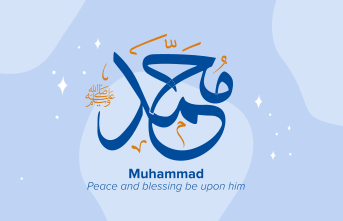
Islam & Muhammad
The Prophet Muhammad (peace be upon him) and his role in Islam
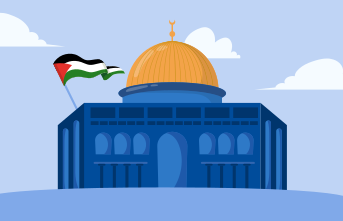
Palestine
Jerusalem and the surrounding holy lands have historically held an important place in the religious traditions and hearts of Muslim believers around the world. Similarly, Christians and Jews have a rich history in the region. Why is Palestine so important to Muslims? What is Al-Aqsa’s significance in Islam? Is the Palestine-Israel war a religious conflict? Learn the answers to these questions and more in this section.
Gender & LGBTQ
How does Islam understand gender? Learn about Islam’s definition of roles, responsibilities, relationships and interactions. This section also addresses the topic of Islam’s sexual ethics and homesexuality.

Additional Resources
Are you interested in learning more about Islam? Explore the different resources compiled to help you along your journey in learning about the Islamic faith.
Explore more on this topic
The fundamentals of the Islamic faith, belief, and practice.
The five pillars of Islam are: the testimony of faith, prayer, zakat, fasting of Ramadan, and performing hajj.
Jesus, the son of Mary, is considered a prophet and messenger of God in Islam
The Islamic stance on divorce
Related Topics
What is Hajj? When is Hajj? What is Umrah? What is the difference between Hajj and Umrah? Learn about the significance of Hajj, the rituals of Hajj and Umrah, and the answers to other commonly asked questions about Hajj and Umrah.
For the majority of the world’s 1.8 billion Muslims, Islam represents a comprehensive way of living a peaceful life devoted to God. However, over time, fearmongers and the actions of a few have stirred doubt about Islam’s views on violence. What does Islamic doctrine truly have to say about terrorism, jihad, and honor killings?
Ramadan is the holiest month of the year for Muslims. It’s the period in which the Prophet Muhammad (peace be upon him) was visited by the archangel Gabriel and began to receive the Qur’an—the final scripture revealed by God. Believers commemorate this revelation through prayer, charity, and building a closer relationship with God.
Islam has a long scholarly tradition of acknowledging mental health struggles and guiding believers towards healing through both spiritual and clinical means. Explore how trauma, meditation, OCD, and other mental health topics are viewed from an Islamic lens.
At its simplest, shariah is the Islamic interpretation of God's law, but it is also a common source of misunderstanding. Read on for an in-depth explanation of sharia, its implementation, and related terms.
In Islam, the sole purpose of creation is to worship and devote oneself God. As God says in the Qur’an: "I did not create jinn and mankind except to worship Me" [Qur’an, 51:56]
How does Islam view women? Do women have rights in Islam? Are men and women equal in Islam? What is hijab? Explore topics around the role of women in society, modesty, inheritance laws, divorce, and other commonly-asked questions about women in Islam.
The Prophet Muhammad (peace be upon him) and his role in Islam
Jerusalem and the surrounding holy lands have historically held an important place in the religious traditions and hearts of Muslim believers around the world. Similarly, Christians and Jews have a rich history in the region. Why is Palestine so important to Muslims? What is Al-Aqsa’s significance in Islam? Is the Palestine-Israel war a religious conflict? Learn the answers to these questions and more in this section.
How does Islam understand gender? Learn about Islam’s definition of roles, responsibilities, relationships and interactions. This section also addresses the topic of Islam’s sexual ethics and homesexuality.
Are you interested in learning more about Islam? Explore the different resources compiled to help you along your journey in learning about the Islamic faith.